

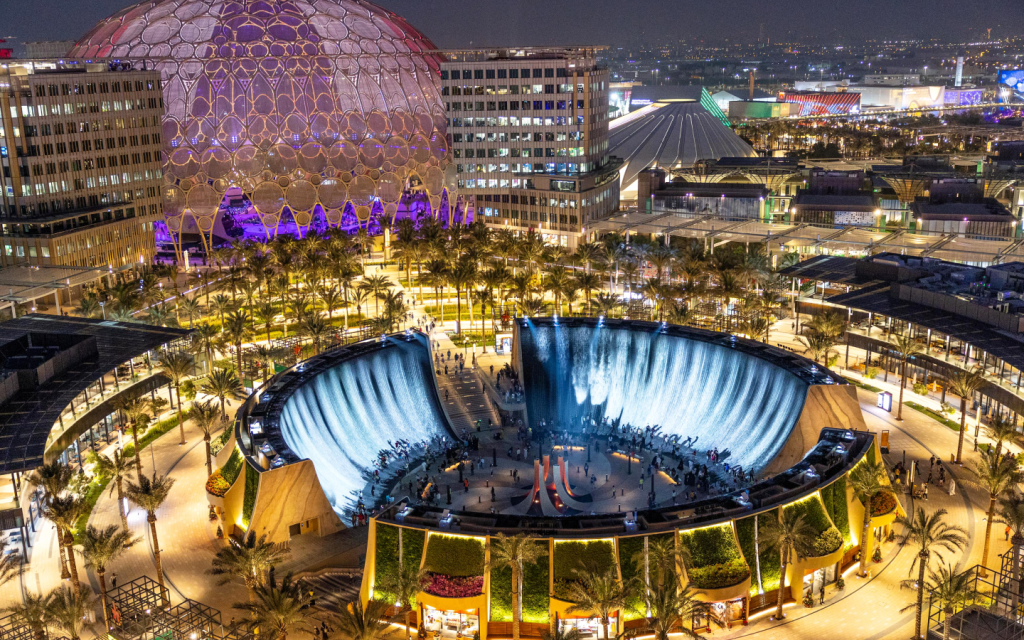
Expo City Dubai plays a direct and measurable role in accelerating Dubai’s economic growth by converting a time-bound global event into a permanent, future-ready business ecosystem. The city functions as a hub for innovation, foreign direct investment, talent attraction, and sustainable urban development, all of which directly feed into Dubai’s long-term economic strategy.
From direct operational exposure to business setup trends, licensing patterns, and post-Expo investment flows, this analysis reflects applied market experience rather than theoretical assumptions. The objective is to explain how Expo City Dubai strengthens economic resilience, supports new business formation, and creates scalable opportunities across multiple sectors.
How Expo City Dubai Fits into Dubai’s Economic Strategy
Expo City Dubai aligns closely with Dubai Economic Agenda D33, which aims to double the emirate’s economy by 2033. Instead of operating as a standalone development, Expo City functions as an integrated economic zone supporting trade, innovation, and advanced services.
Key economic roles include:
-
Acting as a magnet for global companies seeking a future-focused operating base
-
Supporting knowledge-based industries rather than cost-driven models
-
Anchoring long-term employment generation beyond construction and tourism
According to the Dubai Department of Economy and Tourism (DET), Expo 2020 and its legacy developments contributed over AED 154 billion to the UAE economy between 2013 and 2031, with Expo City forming the backbone of post-event economic continuity.
Business and Investment Impact on the Local Economy
Foreign Direct Investment and Company Formation
Expo City Dubai attracts multinational firms, scale-ups, and research-driven enterprises looking for regulatory clarity and ecosystem depth.
Observed investment advantages include:
-
Streamlined licensing environments
-
Proximity to global trade routes
-
Access to government-backed innovation programs
UAE Ministry of Economy data shows that FDI inflows grew by over 10 percent year-on-year following Expo 2020, with legacy districts such as Expo City absorbing a significant share of new market entrants.
Bonus Tip: Businesses with digital-first or advisory models integrate faster due to lower infrastructure dependency.
Sector-Wise Economic Contributions
Economic impact differs by sector. The table below outlines how Expo City Dubai contributes across key industries.
Sector and Type of Economic Contribution
Technology and Innovation:
Contribution: R&D centers, smart city pilots, AI and clean-tech adoption
Logistics and Trade:
Contribution: Supply chain optimization, regional HQs, re-export operations
Professional Services:
Contribution: Consulting, compliance, finance, and operational services growth
Sustainability and Energy:
Contribution: Renewable energy deployment, carbon-neutral infrastructure
Tourism and Events:
Contribution: Year-round exhibitions, conferences, and business tourism
Source: Dubai DET and UAE Ministry of Economy
Infrastructure and Technical Foundations Supporting Growth
Expo City Dubai is built on infrastructure designed for long-term commercial use rather than temporary activity.
Core Technical Specifications and Economic Relevance
| Infrastructure Element | Economic Benefit |
|---|---|
| Smart Mobility Systems | Reduces operational friction by enabling faster movement of people and goods |
| District Cooling Networks | Lowers large-scale energy dependency and improves long-term efficiency |
| Digital Governance Platforms | Accelerates approvals, licensing, and ongoing compliance processes |
| Mixed-Use Zoning | Enables live-work-play environments that support skilled workforce retention |
These systems reduce indirect operating costs and improve productivity, which directly influences business sustainability.
Workforce and Talent Attraction Effects
Expo City Dubai strengthens Dubai’s position as a global talent destination by offering:
-
Walkable urban design
-
High-quality residential and commercial integration
-
Access to innovation-led employment
According to a PwC Middle East workforce report, cities offering integrated work-life infrastructure experience up to 25 percent higher skilled talent retention, reinforcing long-term economic output.
Practical Considerations Before Entering Expo City Dubai
Before committing to operations within or around Expo City Dubai, decision-makers should evaluate:
-
Regulatory compatibility with business activity
-
Long-term workforce requirements versus short-term project needs
-
Alignment with sustainability and compliance frameworks
-
Dependence on international versus regional markets
Bonus Tip: Companies planning mainland operations should assess proximity benefits rather than assuming location alone drives value.
Relevant Business Support Services Offered
StartUp Zone supports businesses navigating Dubai’s evolving economic zones by focusing on operational clarity rather than sales-driven guidance. Relevant services include:
Mainland License:
Supports companies seeking operational flexibility across Dubai without geographic restrictions.
Freezone License:
Suitable for businesses aligned with innovation, technology, and international trade models.
Bank Account Opening:
Facilitates compliant account structuring aligned with UAE banking regulations.
VAT Services:
Ensures regulatory alignment for businesses operating across multiple jurisdictions.
Common Decision-Oriented Questions Businesses Ask
Is Expo City Dubai suitable for early-stage companies
Yes, particularly for innovation-led and service-based businesses that benefit from ecosystem access rather than heavy infrastructure.
Does location inside Expo City matter more than licensing
Licensing structure determines operational scope; location enhances strategic positioning but does not replace regulatory fit.
Are sustainability requirements mandatory
Sustainability alignment is strongly encouraged and often embedded into operational standards.
Long-Term Questions Businesses Consider
How does Expo City Dubai affect long-term scalability
The ecosystem supports expansion through access to talent, infrastructure, and government-backed initiatives.
Will Expo City remain economically relevant
Its integration into Dubai’s long-term economic planning reduces dependency on short-term cycles.
Does Expo City favor specific industries
Knowledge-driven sectors gain the highest leverage, though ancillary services also benefit indirectly.
How does Expo City compare to traditional free zones
Expo City emphasizes ecosystem depth over transactional licensing advantages.
Key Takeaways
Expo City Dubai functions as a structural economic asset rather than a symbolic legacy project. Its value lies in sustained investment attraction, productivity-driven infrastructure, and long-term alignment with Dubai’s economic objectives. Businesses evaluating entry should focus on strategic fit, regulatory structure, and future scalability rather than short-term incentives.