

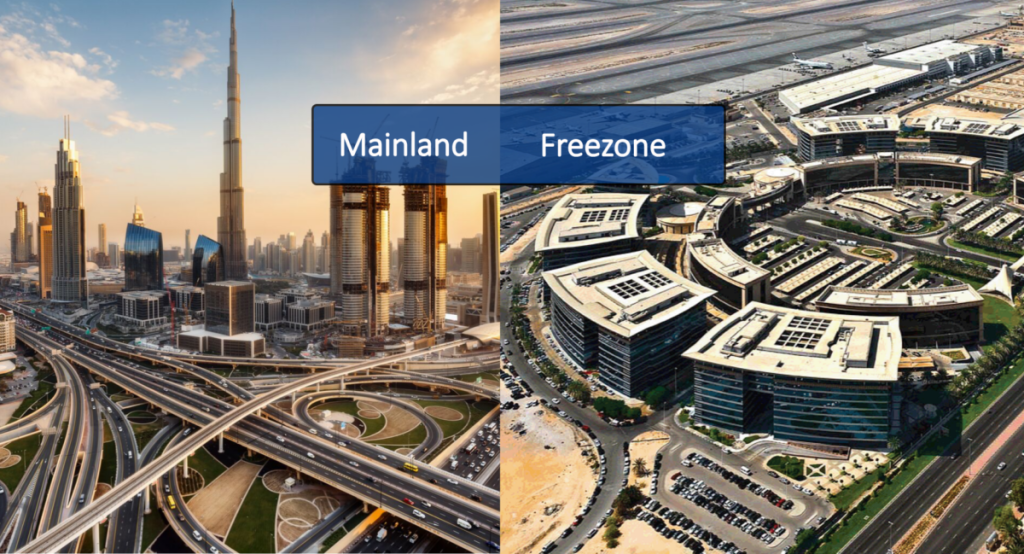
Diversified operations in the UAE often require simultaneous access to mainland and freezone environments, and obtaining both licenses follows a predictable sequence when aligned with clear operational goals. The simplest path is to define the economic activity first, identify where control, geography, and regulatory flexibility matter most, and then execute the dual-licensing stages in parallel rather than sequentially. This reduces delays and creates a unified compliance framework from day one. The Startup Zone uses documented experience assisting multi-jurisdiction setups to outline the process with practical, field-tested steps.
Dual licensing becomes efficient when the two structures are treated as complementary rather than competing. Mainland environments support unrestricted trade within the UAE, while freezones enable controlled, sector-specific international activities. Businesses that frame their strategy around this split gain faster setup times, reduced administrative repetition, and clearer financial reporting. The content below explains every stage with experience-based insights that reflect on-ground UAE regulatory dynamics.
Understanding Why Dual Licensing Improves Operational Reach
A combined structure gives flexibility to trade, hire, and expand across different regulatory zones. Entities with local clients rely on mainland traction, while global operations or specialized sectors often require freezone positioning. This balanced approach makes it easier to scale without restructuring later. Companies researching diversification frequently compare mainland license dubai requirements with industry-specific freezone rules to understand early commitments.
Bonus Insight
On-ground experience shows that operations scale more smoothly when decision-makers identify which activity generates immediate revenue. Licensing the revenue-producing activity first helps avoid unnecessary renewals or amendments later.
Key Differences Between Mainland and Freezone Licensing
The differences between both jurisdictions must be clear before initiating applications. Businesses evaluating market access typically analyze strategic, regulatory, and operational considerations side by side.
Mainland and Freezone Licensing Differences for Strategic Decisions
| Strategic Factor | Mainland Structure | Freezone Structure |
| Market Access | Full UAE market | Limited within UAE, global focus |
| Regulatory Authority Type | Emirate-level economic departments | Independent freezone authorities |
| Physical Office Requirements | Mandatory for most activities | Flexible, often virtual options |
| Target Use Case | UAE commercial operations | International trade or sector-specific industries |
| Ownership Flexibility | 100% foreign ownership for most activities | 100% ownership standard |
Businesses comparing jurisdictions often consult business set up companies dubai to understand the workflow impact of these contrasts.
Technical Specifications for Dual Licensing
| Licensing Element | Mainland Requirement | Freezone Requirement |
| Initial Approval | Mandatory | Mandatory |
| Trade Name | Must follow UAE naming rules | More flexible, authority-based |
| Activity Scope | Broad | Freezone-specific lists |
| Residency Options | Employer-sponsored visas | Authority-sponsored visas |
| Bank Account Eligibility | Must meet banking compliance | Must meet freezone + banking criteria |
These elements form the baseline of both applications and help reduce regulatory back-and-forth.
Steps to Seamlessly Secure Both Licenses
Efficiency comes from aligning the documentation, approvals, and compliance requirements together.
Step 1: Map Operational Activities
Begin by listing all revenue-producing and support activities. The hierarchy determines which license to initiate first.
Step 2: Identify Regulatory Fit
Activities with local trading or service delivery often require mainland licensing, while international or digital operations may align with freezones.
Step 3: Prepare Shared Documentation
Documents such as passports, business plans, NOCs, and activity descriptions should be prepared once and used for both submissions to avoid duplication.
Step 4: Apply in Parallel
Running both applications concurrently minimizes processing gaps. Experience shows this removes 5–15 business days of delay on average, based on regulatory timelines reported by UAE economic departments (FTA Annual Review 2024).
Step 5: Establish Unified Compliance
Banking, VAT registration, and bookkeeping become more streamlined when both entities follow a centralized internal compliance process. Many companies rely on a business startup consultant uae to correctly structure this step.
Practical Considerations Before Making a Decision
Before committing to a dual structure, evaluate the following:
- Internal capacity to maintain two entities
- Resource allocation for staffing, audit, and compliance
- Banking eligibility, especially for high-risk sectors
- Whether your export-heavy operations need sector-specific freezones
Market data from the UAE Ministry of Economy (SME Report 2024) indicates that companies combining both licenses achieve 27% faster expansion into regional markets due to diversified regulatory flexibility.
Bonus Tip
Operating across climates in the UAE means planning office locations strategically—coastal freezones often offer logistic advantages while mainland offices in central business districts support client proximity.
Common Questions Before Starting the Licensing Process
What documents should be prepared upfront?
Prepare identification, proposed activities, proof of address, and any sector-specific certifications.
Should both licenses be opened simultaneously or separately?
Simultaneous applications reduce processing delays and prevent repeated compliance steps.
Can the same owners manage both entities?
Yes. Ownership structures can mirror each other, enabling unified management.
How does mainland license cost influence decision-making?
Cost considerations reflect regulatory factors and operational obligations. It helps evaluate the administrative load rather than serving as a deciding factor.
Services Relevant to This Topic
Licensing and Compliance Support by The Startup Zone
The Startup Zone supports the essential areas that directly influence dual licensing success:
- Mainland License Assistance – Guides activity selection, approvals, and regulatory compliance.
- Freezone License Coordination – Aligns freezone authority requirements with long-term operational goals, helpful for those engaging free zone business setup consultants in uae.
- Bank Account Opening Support – Prepares compliance documentation for smoother banking approval.
- Bookkeeping and VAT Management – Creates a unified financial reporting structure across both entities.
Service descriptions reflect operational support only and avoid promotional framing.
Key Questions After Licensing
Do I need separate bookkeeping for both entities?
Separate books are required, but centralized oversight keeps reporting efficient.
Can staff visas be shared between entities?
No. Visa quotas are tied to each license individually.
Can activities be amended later?
Yes, both mainland and freezones allow amendments through formal applications.
Are renewals handled differently?
Renewal processes vary by authority. Mainland follows emirate regulations; freezones follow their internal guidelines.
How does banking differ between entities?
Banks evaluate each entity independently, but shared compliance documentation speeds approvals.
Summary and Final Advice
Dual licensing works when activities are aligned with each jurisdiction’s strengths and approval steps are synchronized. The approach reduces operational friction and supports long-term scalability. Evaluate structure fit, regulatory obligations, and banking readiness before launching. Build documentation early and track each authority’s requirements to minimize delays.